
Pole, Pole: 105,795 Steps to Summit Kilimanjaro With My Daughter
Written by Dr Nina Fuller-Shavel, CEO of NCIO
105,795 steps. 82 kilometres. Eight days. Five ecosystems. A mother-daughter adventure.
This summer my 12-year-old daughter, Evelyn, and I decided to climb Mount Kilimanjaro in Tanzania to raise money for the National Centre for Integrative Oncology (NCIO). The reason we decided to tackle this challenge is simple - we both strongly believe that integrative oncology care should be accessible to anyone diagnosed with cancer in the UK with support for carers and families.
Evelyn was only three and a half when I was diagnosed with grade 3 stage 2 HER2 positive breast cancer. Together we have made it through 6 months of chemo, 2 surgeries and a year of anti-HER2 treatment with a temporary chemically induced menopause to boot. Evelyn has seen first hand how integrative oncology has supported me and the huge difference it makes to my patients every day in clinic.
Five ecosystems in eight days
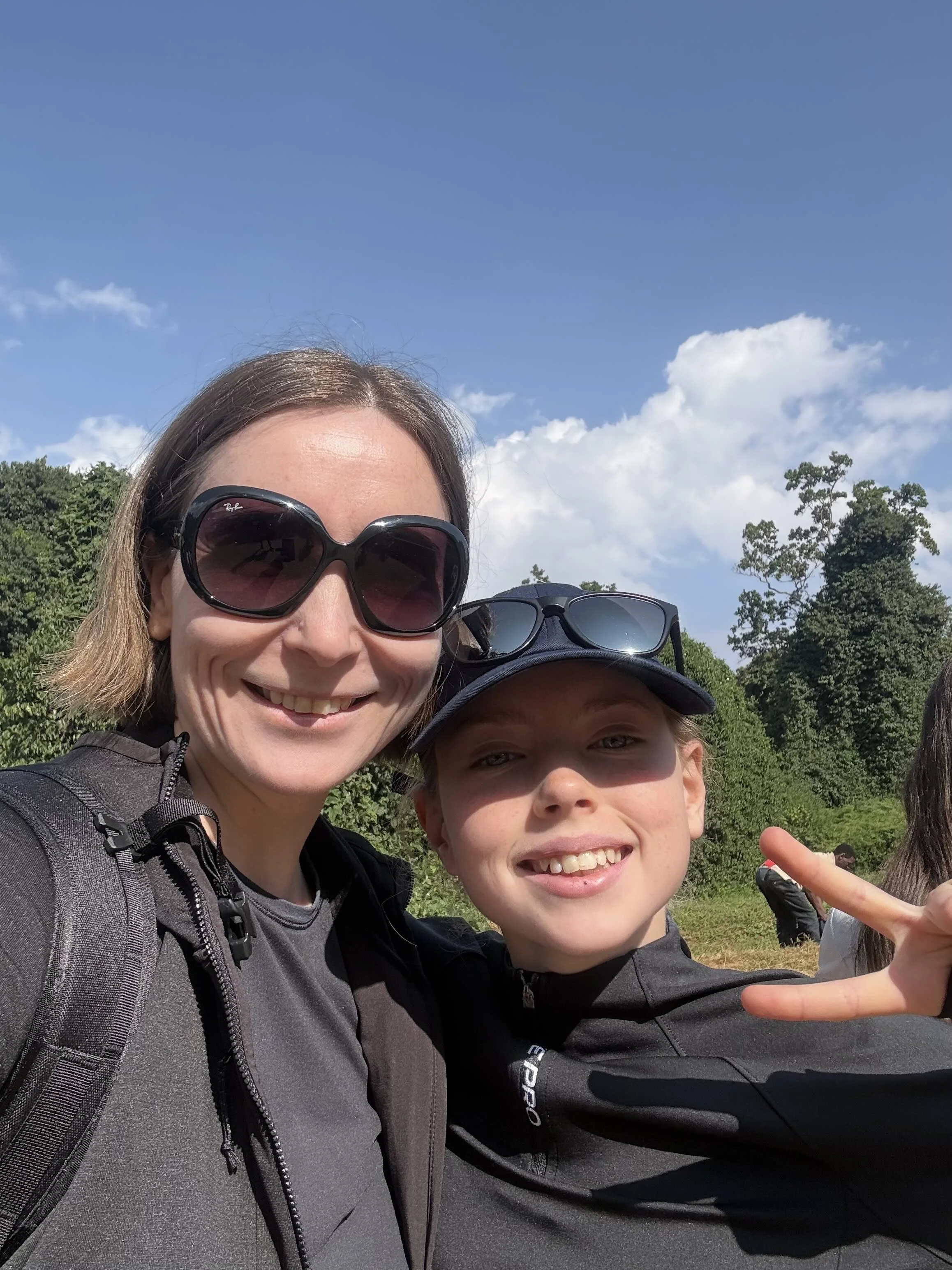
We took the Lemosho route, chosen for its acclimatisation profile. Kilimanjaro is often described as walking from the equator to the Arctic in under a week, and there is so much to see on the route.
Saturday 18 July · Rainforest to Big Tree Camp, elevation 2,780m · 16,042 steps
The first day is green and warm. Dripping canopy, moss on everything, colobus and blue monkeys making their appearances. It is warm enough to sweat through your base layer, and it is genuinely hard to believe that in six days you will be wearing every item of clothing you brought at the same time.
Sunday 19 July · Shira One, 3,500m · 11,572 steps
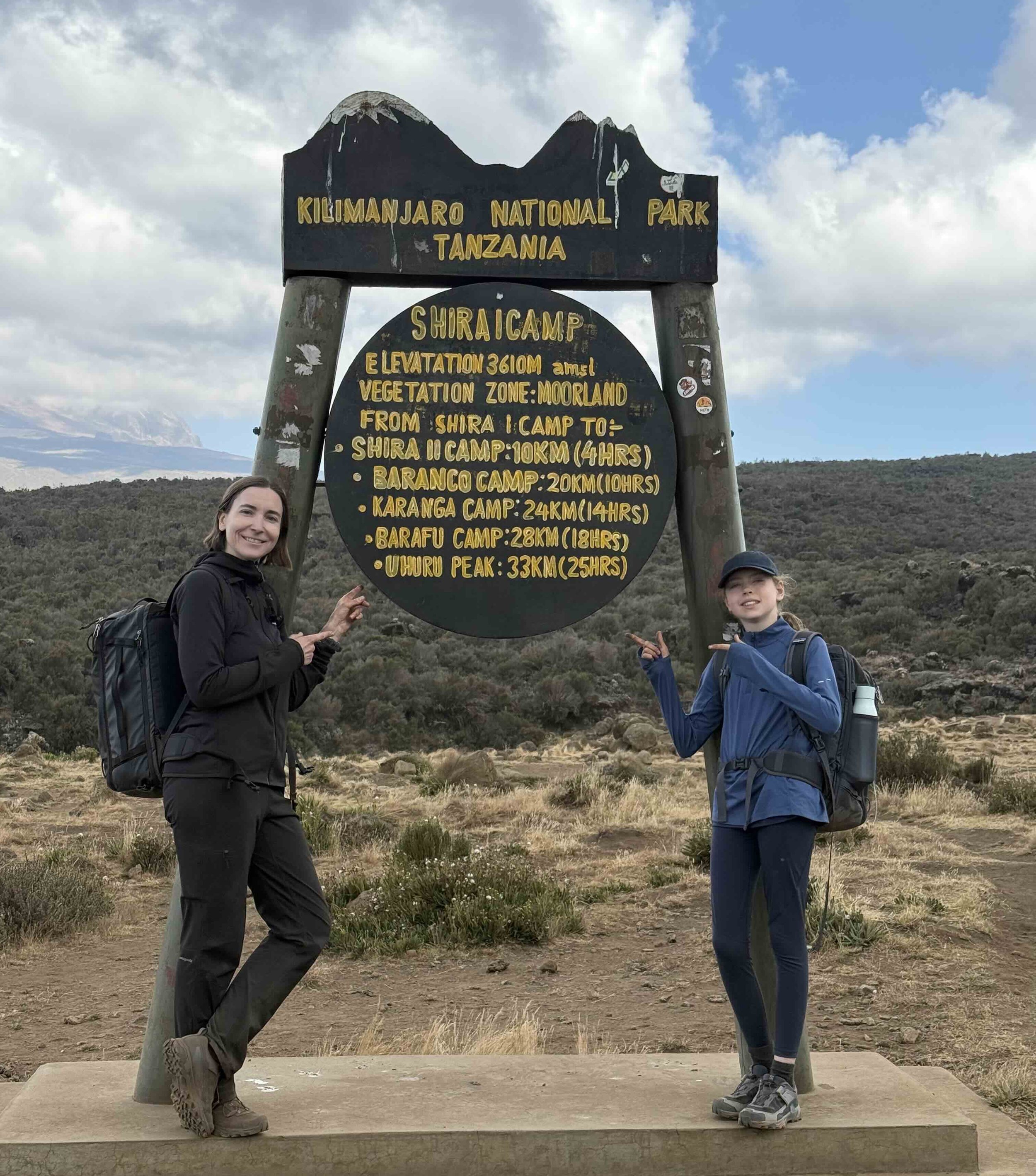
The forest stops, and the moorland zone begins. The towering trees disappear and we now see giant lobelias and groundsels, walking under the open sky. We finish the walk by camping on the Shira caldera, which is a massive, collapsed volcanic crater forming a high-altitude plateau roughly 500,000 years old.
Monday 20 July · Shira Cathedral and Shira Two, 3,900m · 17,984 steps
A big day on the Shira Plateau formed when the ancient Shira volcano erupted and subsequently collapsed to form the caldera. We went out towards Shira Cathedral on the old crater rim as an acclimatisation walk, then came back down the ridge to camp. Nearly 18,000 steps to gain just 400 metres of altitude but essential work to support altitude tolerance.
Tuesday 21 July · Lava Tower · 4,630 m · 7,787 steps
Above the vegetation line the mountain turns lunar, and we walk through alpine desert and volcanic scree. We camped at Lava Tower, a great solidified funnel of lava, wreathed in cloud. Fewer steps than any day so far but this is where the thin air starts to make itself properly known.
Wednesday 22 July · The Great Barranco Wall to Karanga Camp, 4,305m · 11,793 steps
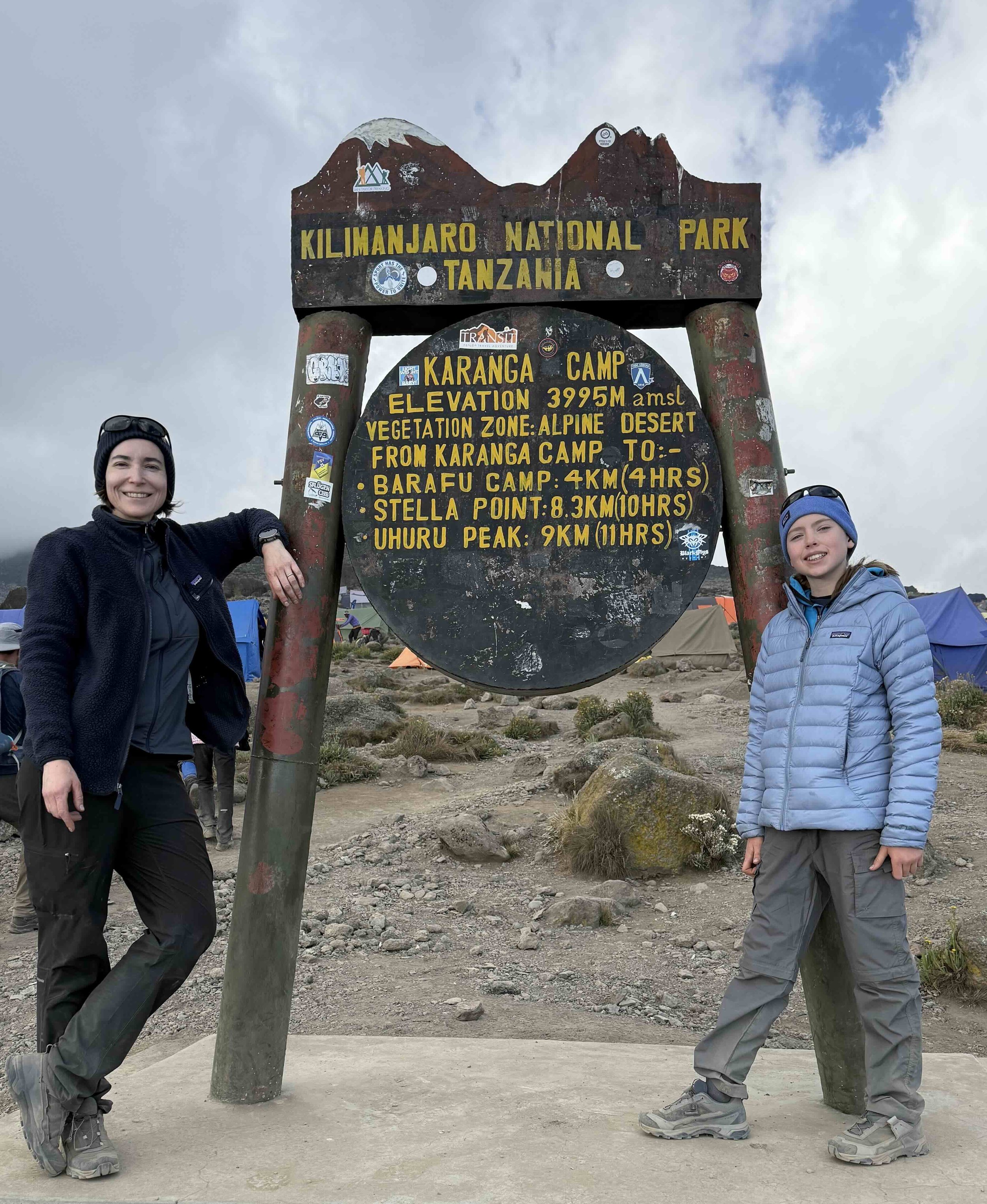
This was Evelyn's favourite day. The Barranco Wall rises 257 metres, straight up, out of the valley. From below it looks like a cliff, and everybody's morning conversation stops when they first see it properly. Close up it resolves into a zigzagging path over a jumble of rock left behind by a landslide around 100,000 years ago. There are long sections where walking will not do and you use your hands, and one narrow ledge, known as the Kissing Rock, where the path is so tight you press yourself flat against the wall to get round it.
Watching my twelve-year-old scramble up 257 metres of volcanic rock at 4,000 metres of altitude, single file, hands on stone, entirely unbothered (while I sometimes had my heart in my throat looking at her), is something I will be thinking about for many years to come.
Thursday 23 July · Barafu Camp, 4,640m · 5,626 steps
The quietest day. A short walk up to base camp, arriving early, and then an afternoon of doing almost nothing at all on purpose. We eat when we do not feel like eating, knowing that the next day will take all of our energy and any reserves we may have, and aim to get an early night, wearing almost all of our gear to stay warm in our sleeping bags.
Friday 24 July · Summit day and down to Millennium/High Camp, 3,790m · 21,417 steps
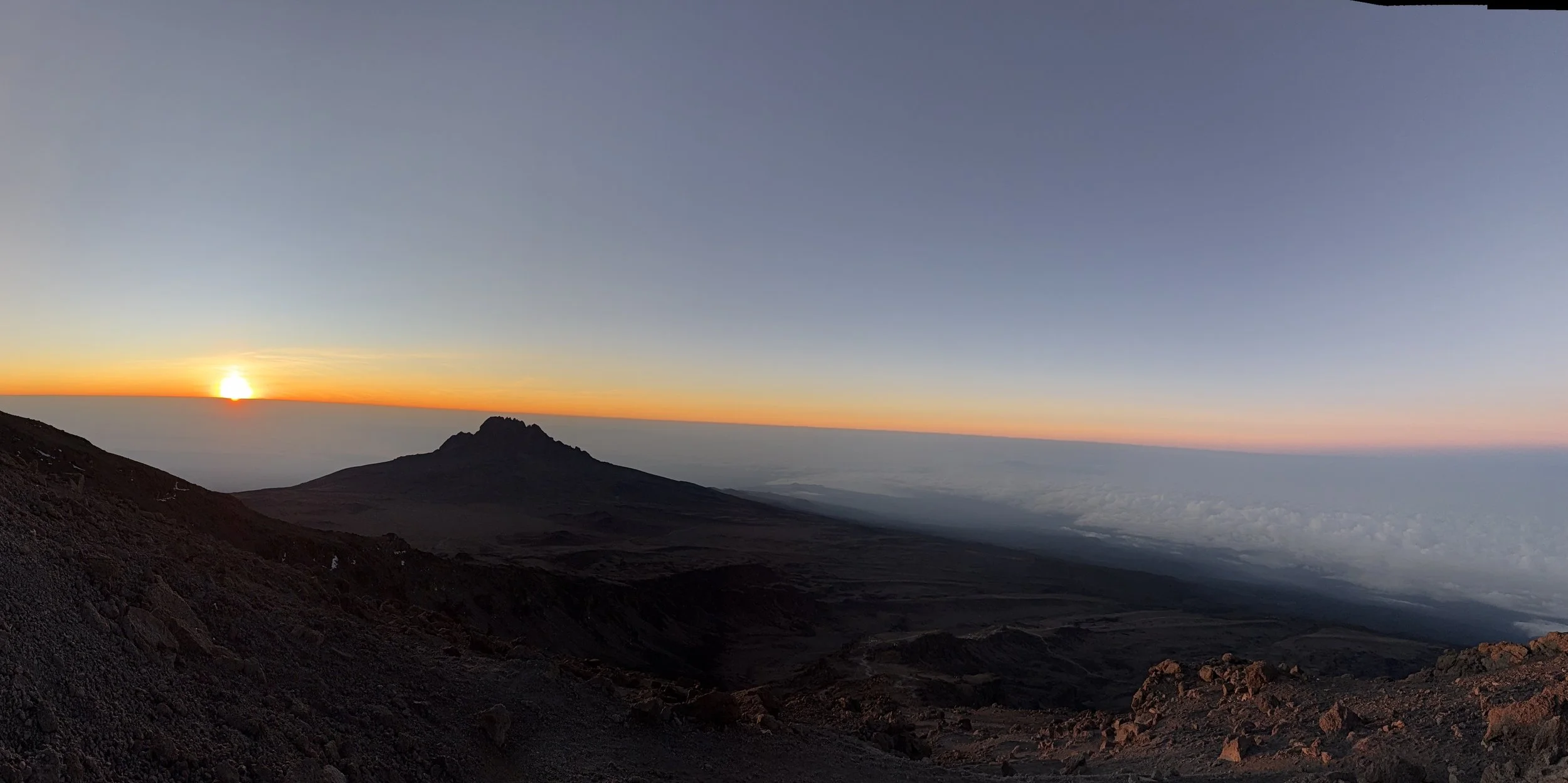
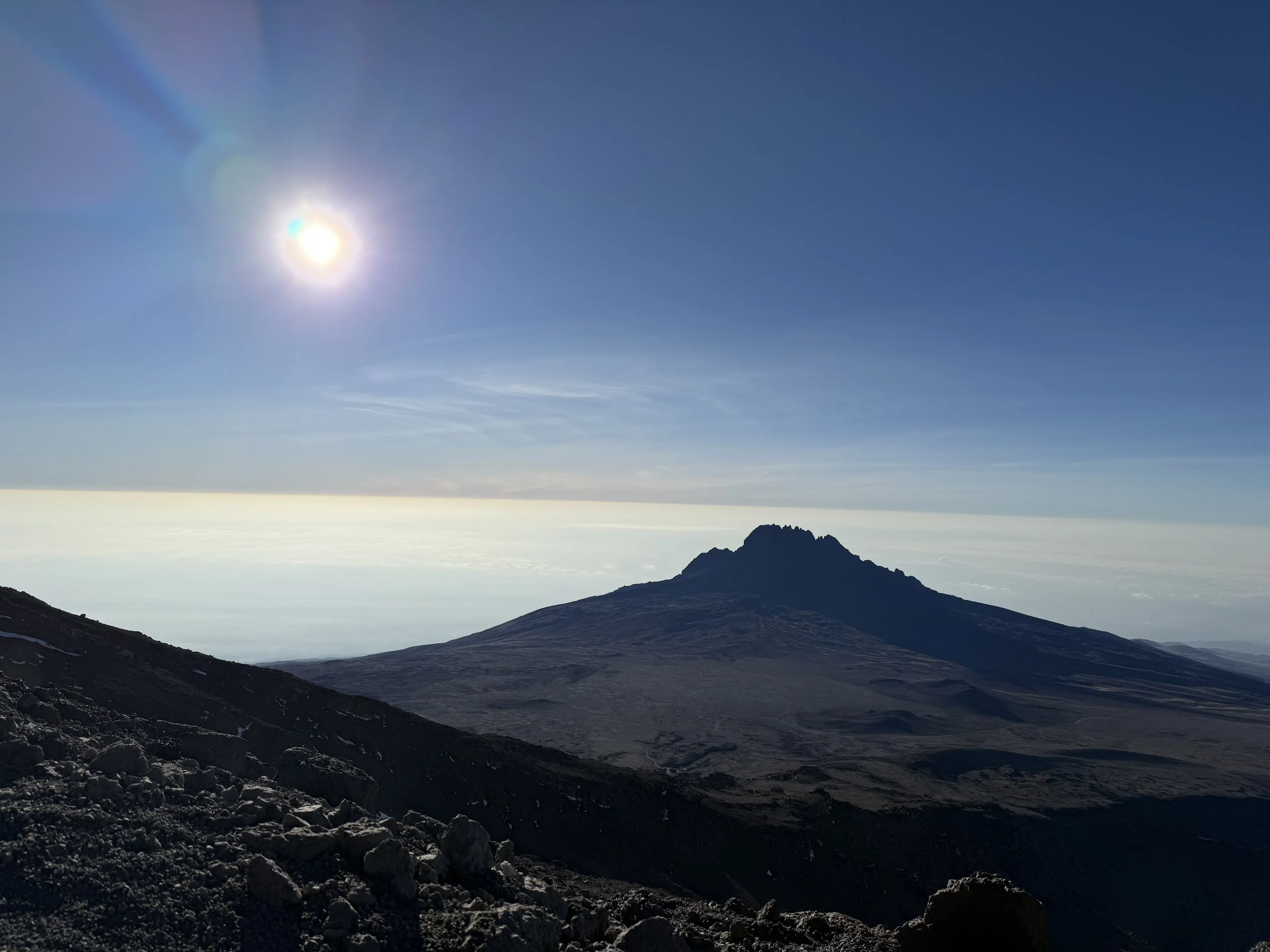
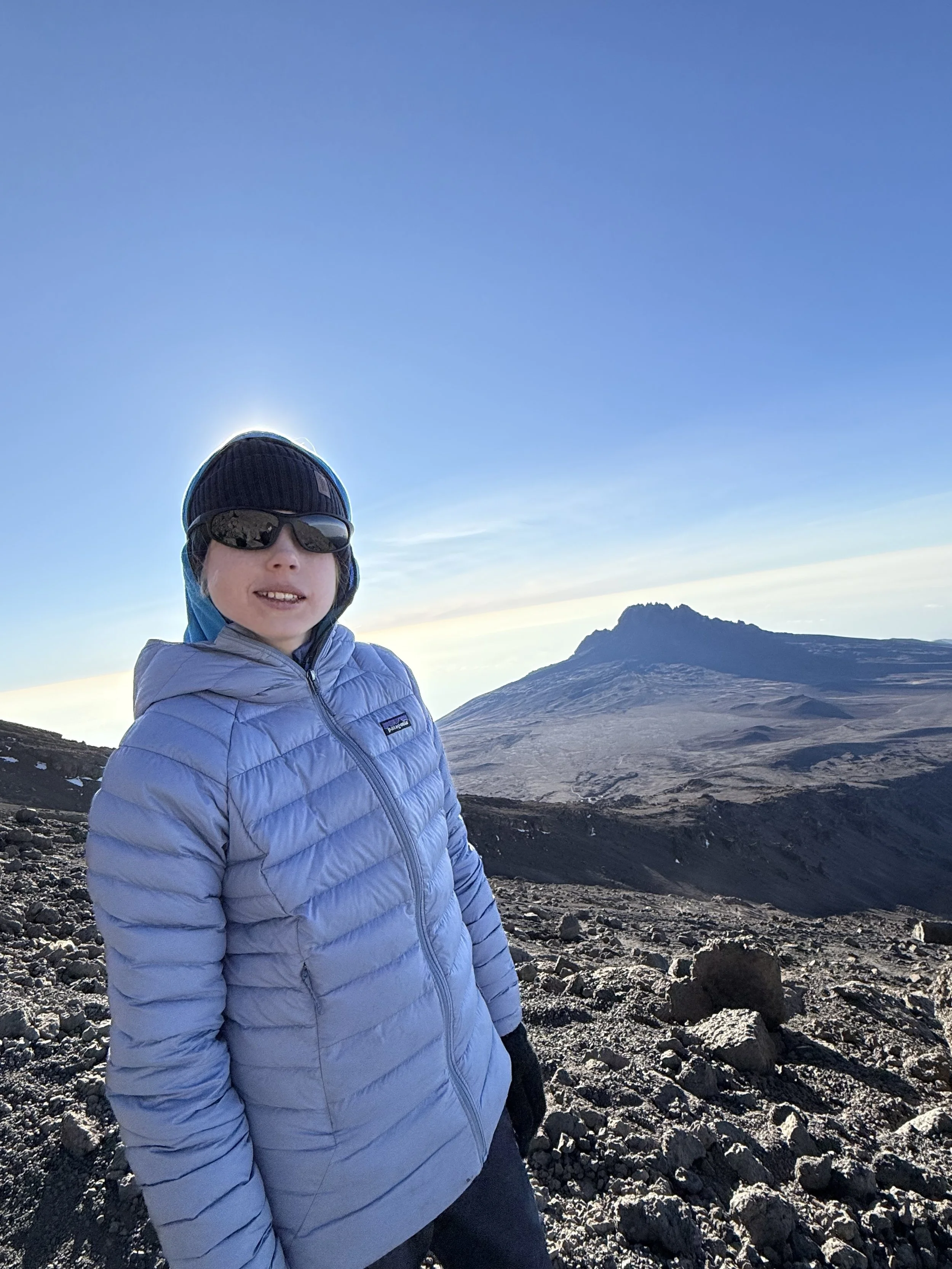
Out into the bitter cold around midnight, climbing in the dark from 1am, one slow footstep at a time. Pole, pole (slowly, slowly), the guides say, over and over. Sunrise came over Mawenzi while we were still climbing, and we finally make it to Stella Point together just over 8 hours from when we started. Evelyn is my absolute hero through it all. Even after an episode of vomiting, she immediately says ‘I am going to make it’, and she does, keeping going through shivering, tears and sheer exhaustion
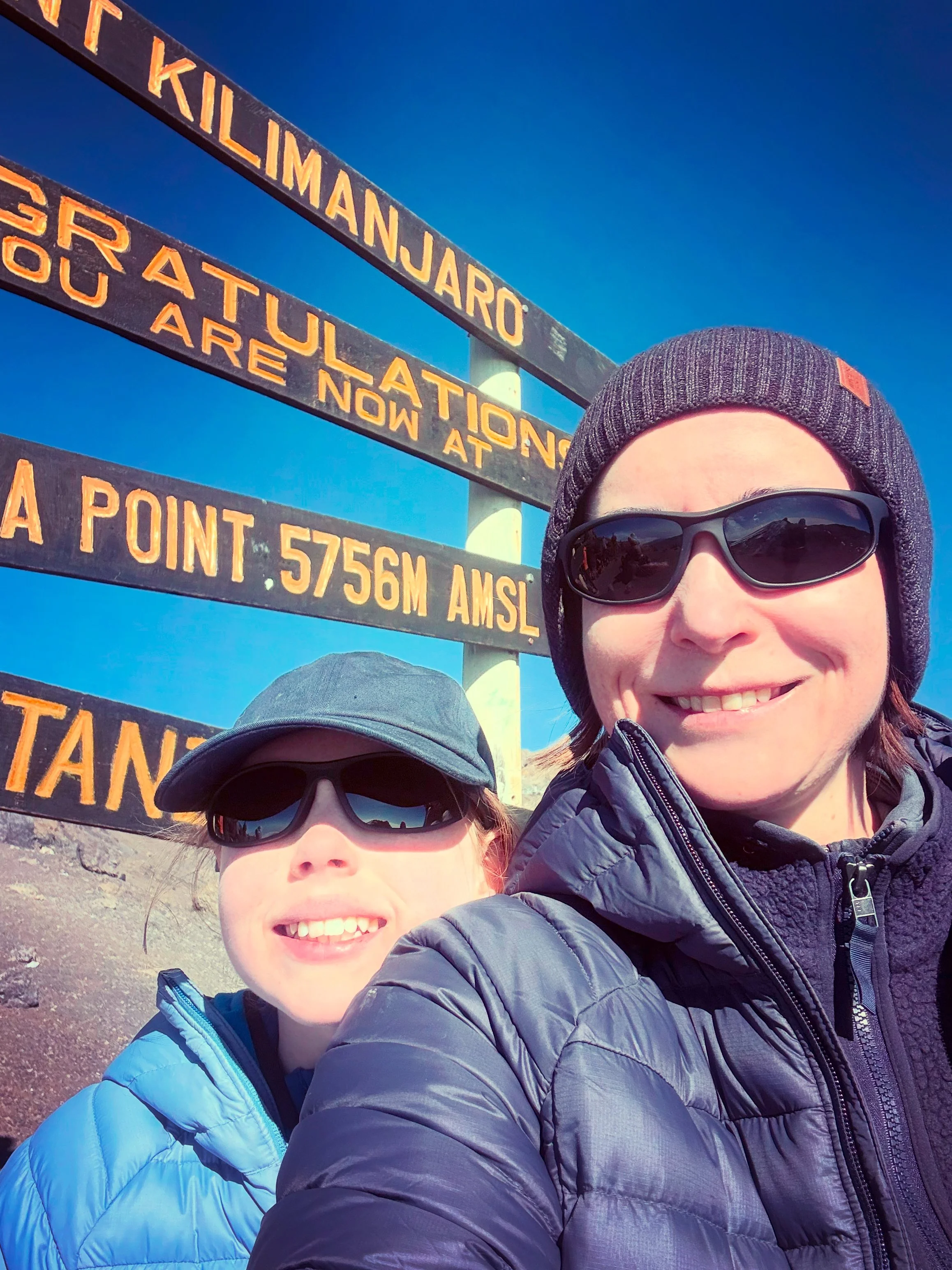
We get to Stella Point, which is one of Kilimanjaro's three official summit points, on the rim of the Kibo crater, with the official Kilimanjaro climbing certificate. As Evelyn was starting to feel the altitude more at that point with increasing headaches and nausea, we both decided not to go on further to the Uhuru peak (the third and final summit point). We turned at the Stella Point summit, together, with the sun up and the glaciers below us, and we came down as a team, making it back to camp with a short encounter with sharp shale on my part, leaving a 5cm gash on my shin. After a couple of hours of rest and a short refuel, we then walk a further 2.5 hours to the Millenium/High Camp to rest for the night.
Saturday 25 July · Down to Mweka Gate, 1,630m · 13,574 steps
Back down through all of it in reverse. Alpine desert, moorland, and finally into the wet green heat of the rainforest, where the air is so thick with oxygen after a week up high that it feels slightly surreal. After heavy rain, we slip and slide through thick mud all the way down to the gate with muscles trembling.
What do the mountain climb and cancer treatment have in common?
Nobody gets up Kilimanjaro alone. We had an expedition leader, local guides, porters who carried what we could not, and cooks who put hot food in front of us to fuel us, while Evelyn and I did the walking, knowing that we need to take care of both our physical and mental reserves.
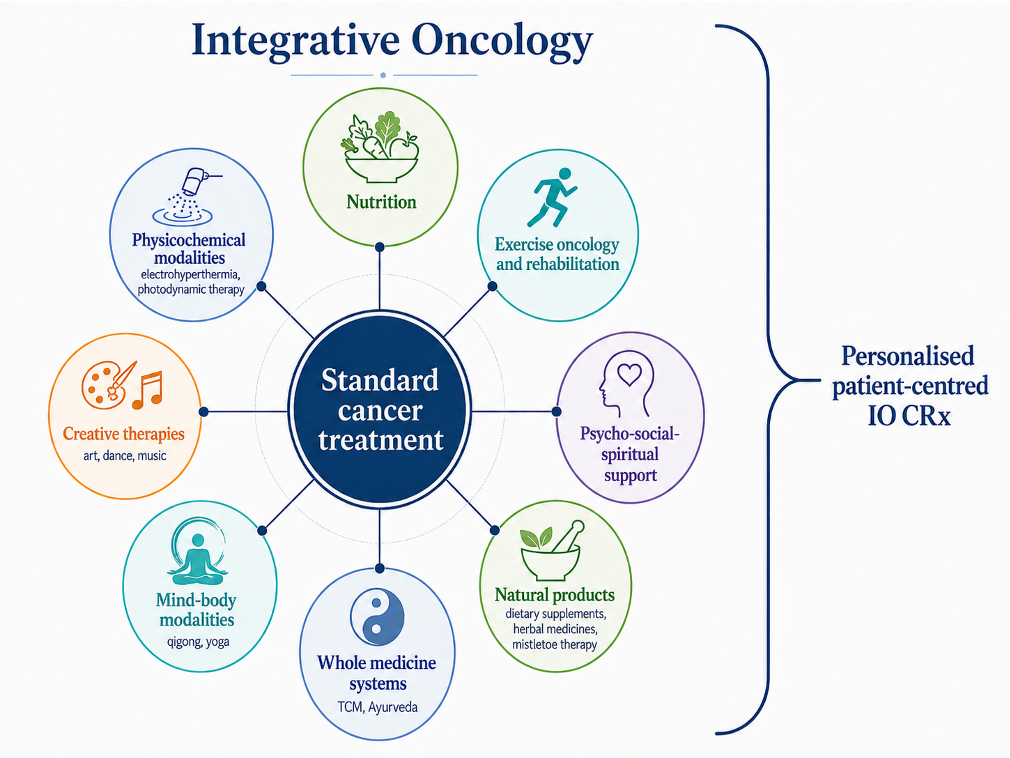
Patient-centred integrative oncology (IO) as a complementary prescription (CRx) to support different phases of cancer treatment with some examples of modalities that may be used © Dr Nina Fuller-Shavel 2026
Cancer treatment is also absolutely team effort. The oncology team does the definitive work of treating cancer but what surrounds the treatment decides how much of you arrives at the other end. Nutrition to support recovery, movement to promote resilience and reduce fatigue, psychological support when the fear arrives at three in the morning, sleep, symptom management, help for the family standing next to you - all of these truly matter. This is integrative oncology: evidence-informed whole person care working alongside standard oncology treatment to support quality of life and personal resilience, manage side effects of treatment and support symptom control and optimise clinical outcomes, helping you reach your personal summit.
And pole, pole (slowly, slowly) is the whole philosophy. The people who summit Kilimanjaro are rarely the fittest ones. They are the ones who go slowly enough to still have something left at 5,000 metres. In cancer care this means taking each day as it comes.
The descent counts too
Here is the part nobody puts on the fundraising page. Coming down was brutal on the knees, and the recovery afterwards took longer than either of us expected. You do not step off a mountain and resume normal life the following Monday. The body needs time it did not ask permission for.
Survivorship works the same way, and it is the part of the cancer pathway that gets the least attention. Active treatment ends, the appointments thin out, everyone tells you that you must be so relieved, and you are left with fatigue, altered body, altered mind, and no map. The same is true during treatment breaks for people living with cancer. This ‘descent’ is not the easy bit. It is just the bit that happens when everyone has stopped watching.
Building proper integrative support for survivorship care is a large part of what we are raising money for, and we hope that you can help us make a difference.
Please help us make our climb count.
Evelyn and I are raising for two different parts of the NCIO charity.
Evelyn · Children, teens and families
The goal is to start with building a nurse-led helpline with 1:1 nutrition and rehabilitation telehealth support, available to any family in the UK who has a child diagnosed with cancer.
Dr Nina · Adult integrative oncology and the GRiT Centre
To build the multidisciplinary workforce we need across psycho-oncology, lifestyle and integrative medicine, and complementary therapies, so that adults impacted by cancer and their carers and families can get this support at any point in their cancer care. The GRiT (Growth and Resilience in Trauma) Centre aims to build a full psycho-oncology and mind-body service to support people of all ages going through cancer treatment and their loves ones.
The final word
We walked 105,795 steps. Every one of them was voluntary, which is the single biggest difference between our week and the experience of anybody going through cancer treatment. People impacted by cancer do not choose their challenge. We chose ours, and we chose to climb this mountain for them.
For larger donations or corporate support, please contact the NCIO directly at hello@ncio.org.uk for our charity's bank details, or get in touch with me via LinkedIn.